Tell people about us. Don't keep it a secret if you have a good experience!
The Park Practice - Dental Clinic

Can Clear Aligners Fix Bite Problems Such as Overbite or Crossbite?
Can Clear Aligners Fix Bite Problems Such as Overbite or Crossbite?
17th April 2026 | by Joshua Low
If your teeth don’t come together properly, it can affect more than your smile. You may notice discomfort when chewing, uneven pressure on certain teeth, or a sense that your bite does not feel balanced. These changes are often gradual, which means many patients live with them for years before seeking advice. It’s also one of the most common questions patients ask today: can clear aligners fix overbite UK cases, or are they only suitable for straightening visible teeth?
Clear aligners are often chosen for their discreet appearance. However, their role goes beyond cosmetic improvement. When planned correctly, they can also help correct how your teeth meet and function together. For many patients, this means improving both comfort and confidence at the same time.
Understanding Bite Problems
Your bite refers to how your upper and lower teeth meet when your mouth is closed. When this alignment is not quite right, it is known as a malocclusion.
Common types include:
- Overbite – upper front teeth overlap the lower teeth more than expected
- Crossbite – some upper teeth sit inside the lower teeth rather than outside
- Underbite – lower teeth sit in front of the upper teeth
- Open bite – upper and lower teeth do not meet fully
In some cases, these differences are mild and do not cause immediate concern. However, over time, even small imbalances can begin to affect daily comfort and long-term oral health. This is often where a routine assessment under General Dental Care becomes important. A dentist can identify early signs of bite imbalance and explain whether treatment may be helpful before the issue progresses further.
.jpg)
Patients with bite problems may experience:
- Difficulty chewing certain foods comfortably
- Jaw tension, stiffness, or clicking
- Uneven wear on specific teeth
- Increased risk of chips or damage
- A growing awareness of how their smile looks
For patients whose bite concerns are linked to tooth position, options such as Clear Aligner Braces may be considered. These treatments are designed not only to improve alignment, but also to support a more balanced and comfortable bite over time. Addressing these concerns early can help prevent further complications and improve overall function.
Can Clear Aligners Fix Overbite in the UK?
For many patients, the answer is yes. Clear aligners can fix overbite UK cases, particularly when the issue is related to the position of the teeth rather than the structure of the jaw. Clear aligners work by applying gentle, controlled pressure over time. Each set of aligners moves your teeth slightly, and as this movement progresses, your bite begins to improve.
They are often suitable for:
- Mild to moderate overbite
- Crowding that affects how teeth meet
- Cases where teeth are tilted or misaligned
- Patients looking for a more discreet treatment option
However, it is important to understand that not all overbites are the same.
They may be less suitable for:
- Severe overbite involving the jaw
- Skeletal differences in jaw position
- Cases requiring significant vertical movement
- Situations where more precise control is needed
In these cases, your dentist may recommend alternative treatment, or a combination of approaches, to achieve the best result.
How Clear Aligners Improve Your Bite
Treatment with clear aligners is carefully planned to improve both alignment and function. It is not simply about straightening teeth, but about guiding them into a healthier position overall. The process usually involves:
- A detailed consultation to assess your teeth and bite
- Digital scans to create a precise model of your mouth
- A personalised treatment plan showing how your teeth will move
- A series of aligners worn in stages over time
- Regular reviews to monitor progress and make adjustments if needed
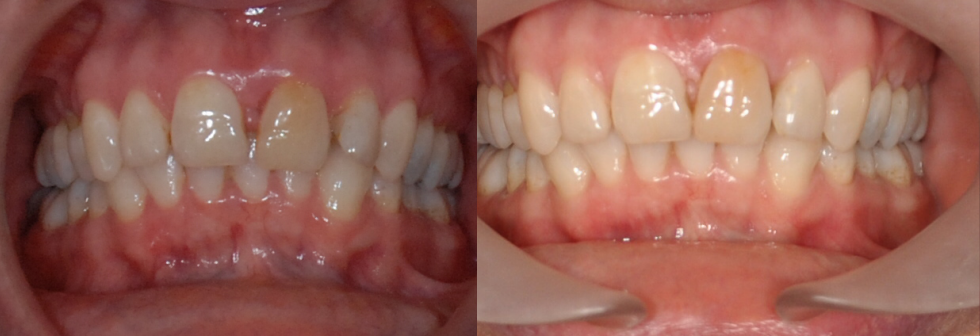
Each aligner is designed to make small, controlled movements. As you progress through the series, your teeth gradually shift into a more balanced position.
This gradual approach allows for:
- Improved contact between upper and lower teeth
- Reduced pressure on specific areas
- Better distribution of biting forces
- A more stable and comfortable bite
Can Clear Aligners Fix Crossbite?
Clear aligners can also be effective in treating crossbite, depending on the cause and severity. They are often suitable when:
- Only a few teeth are affected
- The issue is due to tooth positioning
- The overall jaw alignment is stable
By repositioning the affected teeth, aligners help restore a more natural relationship between the upper and lower arches. This can reduce uneven wear and improve comfort when chewing. In more complex cases, where the jaw itself is involved, additional treatment may be required. This could include other orthodontic options or referral to a specialist. The key is identifying whether the problem is dental (tooth position) or skeletal (jaw structure).
What You Can Expect from Treatment
Clear aligners are designed to fit around everyday life, which is one of the reasons they are popular with adult patients. During treatment, you can expect:
- A gradual improvement in how your teeth align
- A more balanced bite over time
- Reduced strain on certain teeth and areas of the jaw
- A treatment plan that is mapped out in advance
From a practical point of view, aligners are:
- Removable for eating and cleaning
- Discreet in appearance
- Comfortable compared to fixed braces
Patients often find that treatment fits well into their routine, without major disruption to work or social life.
What Results Can You Expect?
The outcome of treatment depends on your starting point and how consistently your aligners are worn. Each plan is tailored, so results will vary from patient to patient. However, the aim is always the same: to improve both how your teeth look and how they function together.
As treatment progresses, many patients begin to notice their teeth becoming more aligned and their bite feeling more balanced. Chewing often becomes more comfortable, especially if there was uneven pressure on certain teeth before treatment.
These improvements are not only functional. A more balanced smile can also have a positive impact on how you feel day to day. Many patients choose to explore treatment as part of a wider approach to care offered by a Cosmetic Dentist Glasgow, where both appearance and long-term dental health are considered together.
Are Clear Aligners Always the Right Choice?
Clear aligners are a suitable option for many patients, but they are not the best approach in every situation. The effectiveness of treatment depends on the nature of the bite problem and how much movement is required. Consistency also plays an important role. Aligners need to be worn for the recommended number of hours each day to achieve the planned results. If they are not worn regularly, progress may slow down and the final outcome may not be as expected.
Why Addressing Bite Problems Matters
It is natural to focus on how your smile looks, but bite problems can affect more than appearance. The way your teeth come together has a direct impact on comfort, function, and long-term oral health. When your bite is not balanced, certain teeth may take more pressure than others. Over time, this can lead to uneven wear or discomfort when chewing. Some patients also experience tension in the jaw, particularly if the bite places strain on specific areas.
Correcting these issues can make everyday activities feel more comfortable. Eating becomes easier, pressure is more evenly distributed, and the overall function of your teeth improves. In the long term, this can help protect your teeth and support better oral health. For many patients, the added benefit is confidence. A balanced bite and aligned smile often go hand in hand, helping you feel more at ease when speaking, smiling, or interacting with others.
Taking the Next Step
If you have been wondering whether clear aligners could help with your bite, the best place to start is with a professional assessment. Clear aligners have made it possible for many patients in the UK to improve both the appearance and function of their smile. When used in the right cases, they provide a structured and gradual way to correct bite problems such as overbite or crossbite.
If you would like to explore your options, a consultation can help you understand what is possible and what treatment would suit your needs. Contact us at the Park Practice for more details.
Opening Hours
MON
8.30am - 5.30pm
TUES
8.30am - 5.30pm
WED
8.30am - 5.30pm
THU
8.30am - 6.30pm
FRI
8.30am - 4.30pm
SAT & SUN
CLOSED
0141 334 1211
enquiries@parkpracticehealth.co.uk
The Park Practice
61 Park Road
Glasgow
G4 9JE