Tell people about us. Don't keep it a secret if you have a good experience!
The Park Practice - Dental Clinic

Dental Implant vs Bridge: Which Is Better for Replacing One Missing Tooth?
Dental Implant vs Bridge: Which Is Better for Replacing One Missing Tooth?
21st April 2026 | by Joshua Low
Losing a tooth can affect more than your smile. It can change how you eat, how you speak, and how comfortable you feel day to day. Even a single missing tooth can place extra strain on the surrounding teeth over time. A common question patients ask is dental implant vs bridge UK. Which option is better for replacing one missing tooth?
Both treatments are widely used and can provide reliable results. The right choice depends on your oral health, your preferences, and what you would like to achieve in the long term. In this guide, we explain how each option works, the differences between them, and what to consider when deciding which treatment may be right for you.
Why Replacing a Missing Tooth Matters
When a tooth is lost, the gap it leaves behind can lead to gradual changes in your mouth. Nearby teeth may begin to shift into the space, which can affect your bite and alignment. Over time, this can lead to:
- Changes in how your teeth meet
- Increased pressure on certain areas
- Difficulty chewing comfortably
- A greater risk of wear or damage
Bone in the area of the missing tooth can also begin to reduce over time. This is a natural process, but it can affect both the structure of your jaw and the stability of surrounding teeth. A consultation under General Dental Care can help assess these changes early and guide you through suitable replacement options.
What Is a Dental Implant?
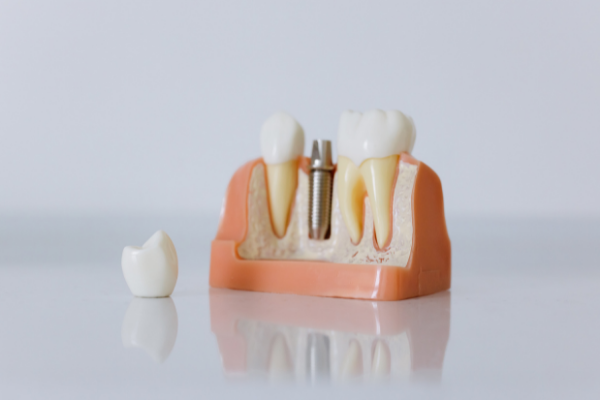
A dental implant replaces both the root and the visible part of a missing tooth. It is placed into the jawbone and acts as a stable foundation for a crown. The process takes place in stages. First, the implant is carefully positioned in the bone. Over time, it integrates with the surrounding tissue, creating a secure base. Once healing is complete, a custom-made crown is attached to restore the appearance and function of the tooth. Treatment with Dental Implants is often chosen because it works independently of the surrounding teeth. This means nearby teeth are not altered during the process.
What Is a Dental Bridge?
A dental bridge replaces a missing tooth by using the teeth on either side of the gap for support. These neighbouring teeth are carefully prepared so that a bridge can be fitted over them, with a replacement tooth positioned in between. At Park Practice, bridges are often considered when the surrounding teeth already require support or restoration. They have been used for many years and can provide a stable and effective solution in the right cases. They are usually completed more quickly than implants, which may suit patients looking for a shorter treatment timeline.
Dental Implant vs Bridge UK: What Are the Key Differences?
When comparing a dental implant and a bridge, the main differences relate to how they are supported and how they affect surrounding teeth. A dental implant is placed directly into the jawbone and supports itself. A bridge, on the other hand, relies on adjacent teeth for support.
With an implant, the neighbouring teeth remain untouched. With a bridge, those teeth need to be prepared, which involves removing a small amount of enamel. Both options restore appearance and function, but they do so in different ways. Our role is to help you understand these differences clearly so you can make an informed decision.
Which Option Feels More Natural?
Both dental implants and bridges are designed to look natural and blend with your existing teeth. However, many patients find that implants feel closer to a natural tooth over time. Because an implant is anchored in the jaw, it provides a stable and independent structure. This often allows biting and chewing to feel more balanced. A bridge can also feel comfortable, but it relies on neighbouring teeth for support. Some patients notice this difference, particularly when eating firmer foods.
How Long Do They Last?
Longevity is often an important consideration when choosing between the two options. Dental implants are designed as a long-term solution. With good care and regular reviews as part of your ongoing General Dental Care, they can last for many years. The crown attached to the implant may need replacing over time, but the implant itself is intended to remain stable. Bridges can also last well, but they may require replacement sooner. Their lifespan often depends on the health of the supporting teeth and how well they are maintained.
What About Treatment Time?
Treatment time can vary depending on the option you choose. Dental implants typically take longer because they involve a healing period after placement. This allows the implant to integrate with the bone before the final crown is fitted. Bridges are usually completed more quickly, as they do not require this healing phase. For some patients, this shorter timeline is an important factor when deciding on treatment. We will always explain the expected timeline clearly so you know what to expect at each stage.
Cost Considerations
Cost is often part of the decision-making process. Dental implants generally involve a higher initial investment due to the complexity of the procedure. However, they are designed as a long-term solution. Bridges are usually lower in upfront cost, but they may need replacement over time. This can affect the overall cost in the long term. At Park Practice, we provide a clear treatment plan so you understand all costs involved before making a decision.
Which Option Is Right for You?
The choice between a dental implant and a bridge depends on several factors, including your oral health, bone condition, and personal preferences. A dental implant may be suitable if you are looking for a long-term solution that does not involve neighbouring teeth. A bridge may be more appropriate if you prefer a quicker treatment or if the surrounding teeth already require support. There is no single answer that suits everyone. Our role is to assess your situation carefully and guide you towards the option that offers the most appropriate and stable outcome.

Final Thoughts
If you are considering replacing a missing tooth, a professional assessment can help you understand your options clearly. Both dental implants and bridges can restore function and appearance, helping you eat more comfortably and feel more confident in your smile. The right choice is the one that suits your needs, your lifestyle, and your long-term oral health. If you would like to explore your options, our team can provide clear and personalised guidance based on your situation. Contact us today for your next appointment.
Opening Hours
MON
8.30am - 5.30pm
TUES
8.30am - 5.30pm
WED
8.30am - 5.30pm
THU
8.30am - 6.30pm
FRI
8.30am - 4.30pm
SAT & SUN
CLOSED
0141 334 1211
enquiries@parkpracticehealth.co.uk
The Park Practice
61 Park Road
Glasgow
G4 9JE